

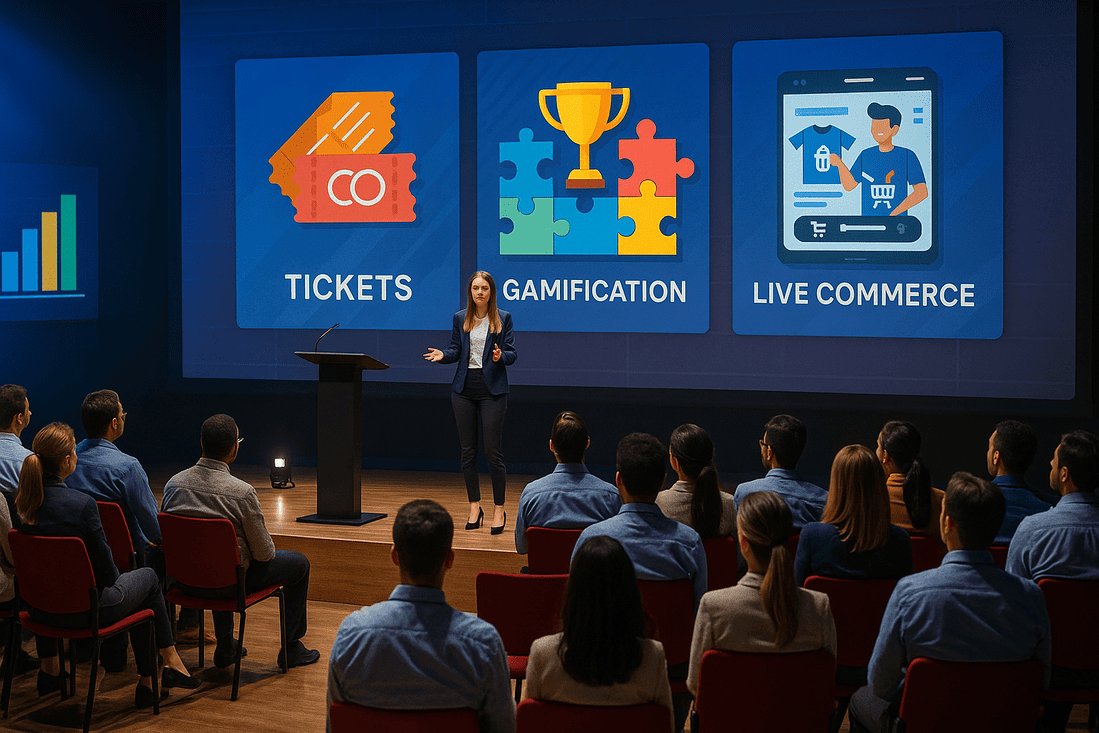
The event organizer (EO) and marketing agency landscape is undergoing a major transformation. With shifting audience behaviors and advances in digital technology, industry players are creating new revenue streams that blend traditional practices with modern innovations.
Hybrid Sponsorship as the Main Revenue Driver
Sponsorship remains the cornerstone of event monetization, but the way it is executed has evolved. A recent study found that 91% of event organizers now allow sponsored sessions, combining offline and online branding to maximize visibility (Markletic, 2024). This hybrid model enables brands to reach audiences both on-site and virtually, ensuring stronger brand recall and measurable engagement.
Tiered Ticketing and Premium Access
Ticketing strategies have also diversified. Many organizers offer tiered options such as regular vs. digital VIP passes, often bundled with premium perks like backstage access or exclusive networking opportunities (Meegle, 2024). Premium content packages, including access to speaker slides, bonus Q&A sessions, or extended learning modules, are becoming increasingly attractive to professional audiences who value exclusivity and deeper engagement.
On-Demand Content and Subscription Models
Another revenue stream gaining traction is on-demand access. Organizers are monetizing post-event content by selling access to recordings or offering subscription-based educational libraries. Studies reveal that 65.9% of events continue to make their content available after the event ends, prolonging audience engagement and driving recurring income (Markletic, 2024). This model transforms a one-off event into a sustainable digital product with long-term value.
Merchandising and Affiliate Programs
Beyond ticket sales and sponsorship, event merchandise—both physical and digital—is emerging as a creative income channel. Branded souvenirs, virtual tokens, or limited-edition items enhance audience connection while adding revenue (Meegle, 2024). In addition, affiliate programs and influencer partnerships help organizers extend their reach while tapping into community-driven promotion models, turning participants into ambassadors.
Technology-Driven Engagement: Gamification and Live Commerce
Technology continues to redefine event experiences. Reports show that 59% of large-scale events now integrate gamification features to increase participation, while advanced analytics platforms allow organizers to measure attendee behavior and engagement (Markletic, 2024; Meegle, 2024). Some brands have even introduced live commerce within their event programs—for instance, Tokopedia Play in Indonesia successfully blended entertainment and real-time shopping during live sessions (AsiaPacDigital, 2024). This convergence of marketing, sales, and entertainment highlights how events can evolve into powerful commercial ecosystems.
Global Opportunities and National Recovery
Globally, virtual and hybrid events offer broader reach and cost efficiency by eliminating the need for physical venues, opening up bigger monetization opportunities for businesses (Meegle, 2024). In Indonesia, the industry is showing remarkable recovery, with the event economy valued at IDR 84.46 trillion in 2024 (EventNusantara, 2024). Harry Nugraha, founder of IPOS, emphasized that innovation, sustainability, and the right technology adoption will be the driving forces behind this momentum. With these shifts, 2025 could mark a full resurgence for the Indonesian event industry (EventNusantara, 2024).
Conclusion
The future of the event industry lies in adaptability. From hybrid sponsorships and tiered ticketing to gamification and live commerce, event organizers are building flexible monetization models that respond to both audience demands and business realities. With global trends aligning and national markets like Indonesia regaining strength, the next few years present a pivotal opportunity for industry players to redefine what an event can be—and how it can create value.