

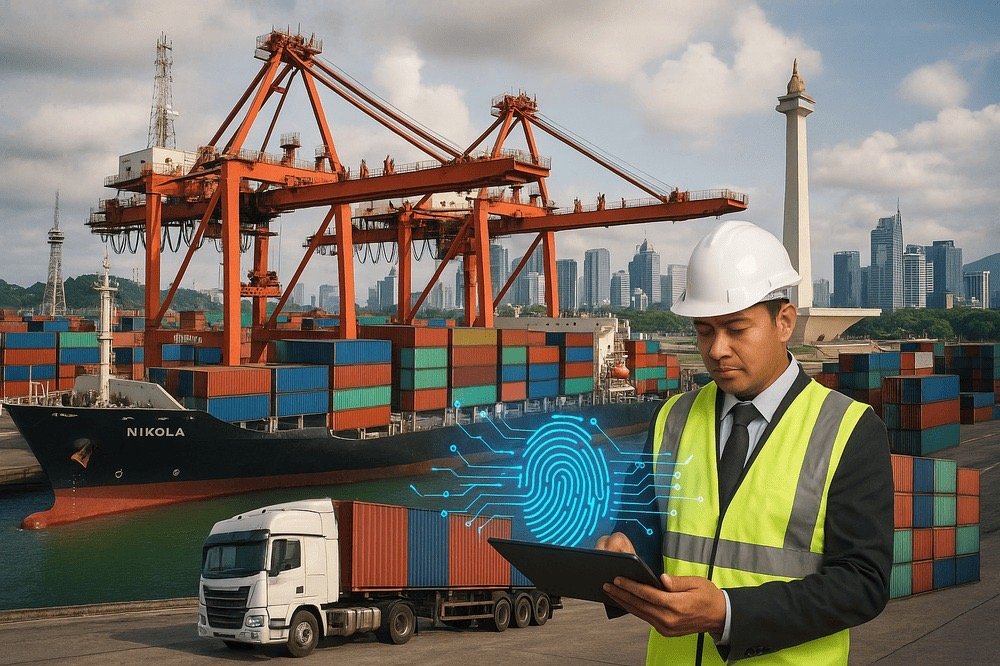
Imagine a farmer in Sulawesi whose harvest arrives at a Jakarta market on the same day, a fisherman in Papua who receives spare parts for his engine on time, and a small trader in Flores who ships goods to a big city without unexpected charges. This is not mere imagination. It is the outcome of a logistics system that works. In a nation of more than 17,000 islands, the ability to reach and serve everyone comprehensively is a measure of national success. Without a reliable distribution network, service loses its bearings: customers face uncertainty, waiting times lengthen, and costs soar. Logistics is not merely the flow of goods; it is the economic backbone that ties welfare together.
Logistics affects almost every aspect of economic life: market prices, export competitiveness, the viability of micro and small enterprises, and the distribution of prosperity across regions. When the flow of goods and information is smooth, production can be planned, inventories stay in check, and consumers receive timely service. When supply chains break down, the consequences are immediate: agricultural produce is wasted, production costs rise, consumer confidence erodes, and exporters lose market share. The World Bank Logistics Performance Index LPI 2023 placed Indonesia at rank 63 out of 139 countries, a reflection of large untapped potential constrained by reliance on traditional infrastructure.
Logistics performance does not materialize by accident. Sunil Chopra and Peter Meindl in Supply Chain Management: Strategy, Planning, and Operation, seventh edition 2020, identify six core variables: physical infrastructure such as roads, ports, and airports; customs and regulatory efficiency; logistics workforce competence; tracking and tracing capability for real time visibility; delivery timeliness; and the quality of international services. Imbalance in any of these areas can trigger a domino effect. For instance, delays can raise costs by 20 to 30 percent, a conclusion drawn from empirical analysis of thousands of multinational firms. Countries scoring highly on these variables, such as Singapore and the Netherlands, demonstrate how logistics optimization can drive growth in the logistics sector of roughly 5 percent per year.
Physical constraints, such as the uneven infrastructure between Java and eastern regions, are no longer the sole reason logistics systems stall. Digitalization has emerged as the principal catalyst. Cloud platforms consolidate data among stakeholders, reducing information silos. The Internet of Things gives real time visibility into cargo. Blockchain provides an immutable audit trail. Artificial intelligence improves forecasting and decision making. Together, these technologies knit fragmented components into an adaptive ecosystem.
Deloitte’s AI in Modern Supply Chain Management 2024 study underscores the transformative role of AI. Deloitte finds that AI can predict demand with up to 95 percent accuracy through machine learning, optimize delivery routes to save up to 15 percent in fuel, and detect anomalies such as packaging damage using IoT sensors. From an analysis of 500 global firms, AI adoption increased operational efficiency by 20 to 30 percent and reduced logistics costs by an average of 10 to 15 percent. Moreover, Deloitte Global’s 2025 Predictions Report projects that autonomous AI agents, such as delivery robots and predictive analytics systems, will be adopted by 25 percent of logistics companies in 2025 and rise to 50 percent in 2027, particularly to address reverse logistics and to raise customer satisfaction by 25 percent. In the Indonesian context, operators such as JNE or SiCepat could use AI for navigation through Jakarta traffic or to monitor cargo across the archipelago in real time. Digital platforms that combine demand forecasting, route optimization, and end to end tracking can eliminate inefficiencies that have long eroded margins for micro and small enterprises.
The application of these technologies goes beyond internal corporate efficiency and extends to the national economy. The MIT Center for Transportation and Logistics in Sustainability in Supply Chains, October 2025, estimates that integrating AI and automation into transport could reduce national costs by US$65 billion per year in developing countries while creating 1.1 million new jobs in tech logistics. The potential for Southeast Asia, including Indonesia, is estimated at US$100 billion if digital infrastructure is upgraded. The study also indicates that these technologies can cut carbon emissions by up to 20 percent through optimized routing and can increase manufacturing exports by 12 to 15 percent.
The Artificial Intelligence Index Report 2025 from Stanford Institute for Human Centered Artificial Intelligence reinforces these findings. AI in logistics can raise labor productivity by as much as 40 percent and help close the skills gap between rural and urban areas. In Indonesia, where roughly 60 percent of the population depends on micro and small enterprises, AI has the potential to elevate small scale supply chains into globally competitive players. The Stanford analysis suggests that countries with high AI adoption in logistics experience economic growth 2 to 3 percent faster and a reduction in structural unemployment of about 5 percent. The Oxford Internet Institute in the Technology and Innovation Report 2025, a UNCTAD collaboration, highlights another benefit: blockchain for supply chain transparency can prevent corruption and losses of up to US$10 billion per year caused by smuggling and logistical leakage, an issue especially relevant to an archipelagic nation with many entry points and distribution channels.
But these benefits do not materialize automatically. Real world obstacles include the digital divide. Only about 50 percent of territory was reported to be covered by 5G by 2025, limiting the pace of technology adoption in remote areas. There are also shortages of skilled logistics personnel, a need for investment in smart infrastructure, and a regulatory framework that must balance innovation with data protection. Fragmented or weak policies risk data misuse and platform incompatibility. Therefore, government private sector collaboration is indispensable. Accelerating broadband to remote regions, digitizing ports and integrating modes of transport, simplifying customs through a single window digital clearance, and rolling out industry aligned vocational training are essential. Innovative financing models, such as transparent public private partnerships tied to performance, are needed to fund smart ports, integrated terminals, and regional logistics hubs without imposing an undue fiscal burden.
To turn potential into reality requires concrete steps. Expand digital infrastructure to remote areas through investment incentives. Modernize ports and integrate transport modes using standardized digital platforms. Implement single window customs clearance and digital document tracking. Launch certification and comprehensive logistics training programs involving industry, universities, and vocational institutions. Facilitate affordable access for micro and small enterprises to digital logistics platforms. And establish data protection and AI ethics regulations aligned with international standards such as the European General Data Protection Regulation. The vision of digital logistics is a vision of inclusive development: narrowing the gap between center and periphery, widening market access for small enterprises, and strengthening national supply chain resilience. This is not merely about corporate efficiency. It is about economic justice for millions of small business owners and for communities in remote regions. For business leaders and policy makers the choice is clear: move together so that the economic pulse of the nation grows stronger and benefits are felt from Sabang to Merauke.