

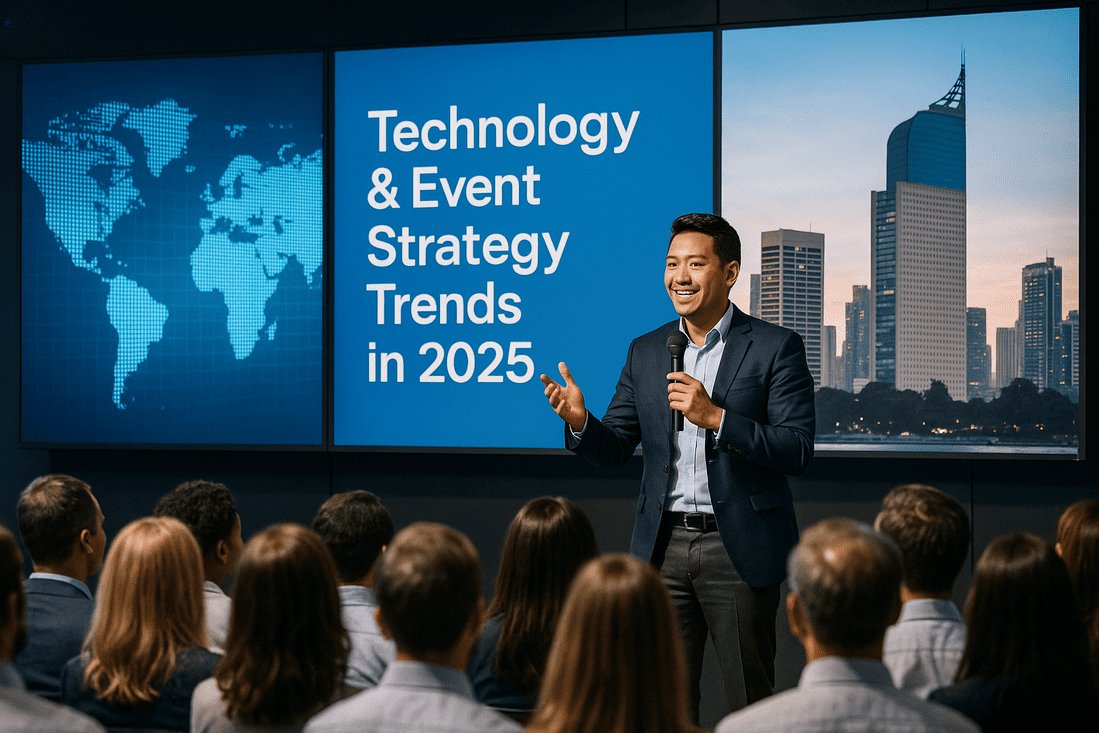
Picture an evening in Jakarta: cafés bustling, digital billboards aglow, and a constant stream of event notifications on phones—clear evidence that attending an event is no longer just about showing up but about choosing how to participate (asiapacdigital.com). Internet penetration in Indonesia has surged, creating an audience that expects seamless online and offline experiences (asiapacdigital.com). That shift requires a rethink of event design, technology choices, and commercial models so experiences remain relevant and valuable across channels.
Hybrid as the baseline for reach and resilience Hybrid formats that combine on-site presence with robust virtual access have moved from experimental pilots into mainstream practice because they extend audience reach while preserving face-to-face interaction (phaedrasolutions.com). Hybrid models enable layered revenue streams—physical ticketing plus virtual access—and allow more flexible sponsorship packages tied to measurable digital impressions and engagement (Eventtia). Planning that starts with a virtual-first mindset prevents the remote experience from becoming an afterthought and ensures parity of value for both audiences (phaedrasolutions.com).
AI delivers personalized, context-aware experiences With audiences fragmented across channels, relevance at scale becomes critical. AI and NLP tools power session recommendation engines, automated matchmaking for networking, and 24/7 chatbot support that reduce friction in attendee journeys (phaedrasolutions.com; asiapacdigital.com). These systems can increase per-session attendance and surface trending topics in real time, enabling programming adjustments that keep content timely and compelling (MarTech). Personalization driven by AI turns generic schedules into bespoke roadmaps for individual participants, increasing perceived value and time-on-platform.
Martech & CRM convert behavior into actionable strategy Behavioral signals generated by AI are only useful if captured and analyzed in a reliable martech stack. CRM platforms, marketing automation, ticketing systems, and real-time analytics dashboards form the operational backbone of modern events (Martech.org; Ascend2). Consolidating registration data, in-event behavior, and post-event follow-ups into one “single source of truth” enables targeted post-event campaigns, precise sponsor reporting, and measurable ROI (Ascend2). These insights inform content sequencing, segmentation, and pricing decisions for future events.
Immersive media moves attendees from watching to feeling Once personalization and data infrastructure are in place, immersive formats deliver deeper engagement. AR and VR let remote attendees explore 3D product demos or virtual exhibition halls with interactivity that surpasses passive streaming (phaedrasolutions.com; Fielddrive). Although immersive experiences require higher upfront investment, they create sponsorship value and reusable on-demand assets that can justify costs for mid-to-large scale events (Grand View Research). Selecting formats—interactive demos for consumer launches or virtual networking lounges for B2B—determines both impact and cost-effectiveness.
Short-form video as the amplification engine Immersive or emotional moments translate exceptionally well into short-form clips that dominate discovery feeds. Video consumption in Indonesia continues to rise, and platforms such as TikTok and Instagram Reels are highly effective for event discovery and promotion (xtix.ai; DataReportal). Fifteen- to thirty-second highlights are ideal for sparking FOMO, while user-generated content programs extend organic reach and provide social proof (We Are Social / DataReportal). Producing short clips daily during an event sustains momentum and creates creative assets for retargeting campaigns.
Market momentum and the business case When hybrid design, AI personalization, an integrated martech stack, immersive media, and short-form distribution are combined, layered monetization becomes possible. The virtual and hybrid events market is growing rapidly, opening new revenue avenues through sponsorships, premium passes, and paid on-demand content for organizers who adapt quickly (Grand View Research). Financial planning—estimating cost per attendee across channels and forecasting lifetime value for on-demand content—helps prioritize investments and set sustainable pricing.
Tactical playbook: what to build first 1. Design virtual-first experiences so remote attendees receive an intentional journey rather than a pared-down mirror of on-site programming (phaedrasolutions.com). 2. Deploy AI incrementally: start with chatbots and recommendation engines, then expand to predictive matchmaking as data matures (phaedrasolutions.com; MarTech). 3. Consolidate martech: integrate CRM, marketing automation, ticketing, and analytics to create a single source of truth for measurement (Martech.org; Ascend2). 4. Pilot immersive features on high-value sessions to test ROI before full rollout (Fielddrive; Grand View Research). 5. Make short-form video routine: schedule daily highlights, speaker soundbites, and attendee reactions for cross-channel distribution (xtix.ai; DataReportal). 6. Embed sustainability metrics: adopt digital ticketing, reduce printed collateral, and report event footprint to align with ESG expectations (phaedrasolutions.com). Measurement: key KPIs to track • Attendance Rate (onsite vs virtual) — to evaluate reach and engagement. • Session Completion / View Time — to measure content resonance. • Engagement Rate (Q&A, chat, networking matches) — to gauge interaction quality. • Lead Quality & Conversion — to assess business outcomes for sponsors and exhibitors. • Content Lifetime Value (views/paid accesses post-event) — to monetize on-demand assets. • Cost per Qualified Lead (CPL) and Sponsor ROI — to justify future pricing and investment.
Short hypothetical case: a tech conference approach A regional tech conference designed as “virtual-first” offers three parallel experiences: a live mainstage, an interactive stream with polling and breakout rooms, and a 3D virtual expo for product demos. AI recommends sessions and suggests networking matches; CRM integrates behavior signals to feed sponsor dashboards; short-form teams publish daily highlight reels that drive registrations for on-demand passes. Result: higher overall attendance, richer sponsor reporting, and a growing library of monetizable content.
Conclusion: technology should amplify human connection AI, martech, AR/VR, and short-form video are reshaping event production, but the central objective remains unchanged: create meaningful experiences that stick with attendees (phaedrasolutions.com; Fielddrive). Technology choices should be guided by the human value they unlock—better relevance, deeper connections, and predictable revenue—rather than novelty alone. For organizers aiming to lead in 2025, the priority is clear: design for people first, enable with data and AI, and amplify through immersive and short-form storytelling.